
A decade after a historic ruling, Philippine fishermen say driven away from the disputed shoal by China -Reuters
By Adrian Portugal and Karen Lema
July 10, 20262:29 PM GMT+8
Updated July 10, 2026
Summary:
A 2016 tribunal ruled that China's fishing restrictions at Scarborough Shoal were unlawful.
Local fishermen say they have been harassed by Chinese vessels near the shoal.
Tribunal decision helped Philippines gain international
MASINLOC, Philippines, July 10 (Reuters) - The Philippines may have won a landmark victory against China's claims in the South China Sea 10 years ago. Still, today local fishermen have become too afraid to venture out to Scarborough Shoal and its prized fishing waters for fear of harassment by Chinese vessels.
The shoal, one of Asia's most hotly contested maritime areas, has been under China's de facto control since 2012. In 2016, an international tribunal — the Permanent Court of Arbitration — ruled Beijing's sweeping maritime claims had no basis under law.
The waters at the shoal, which China calls Huangyan Dao, are traditional fishing grounds shared by multiple nations, including the Philippines, China and Vietnam, the tribunal said. It did not rule on which country had sovereignty over the shoal.
Many fishermen from the coastal town of Masinloc used to go to the shoal at times when they thought Chinese vessels might not be there, such as at night. Now they don't even do that, saying that China has only increased its efforts to block them and chase them away.
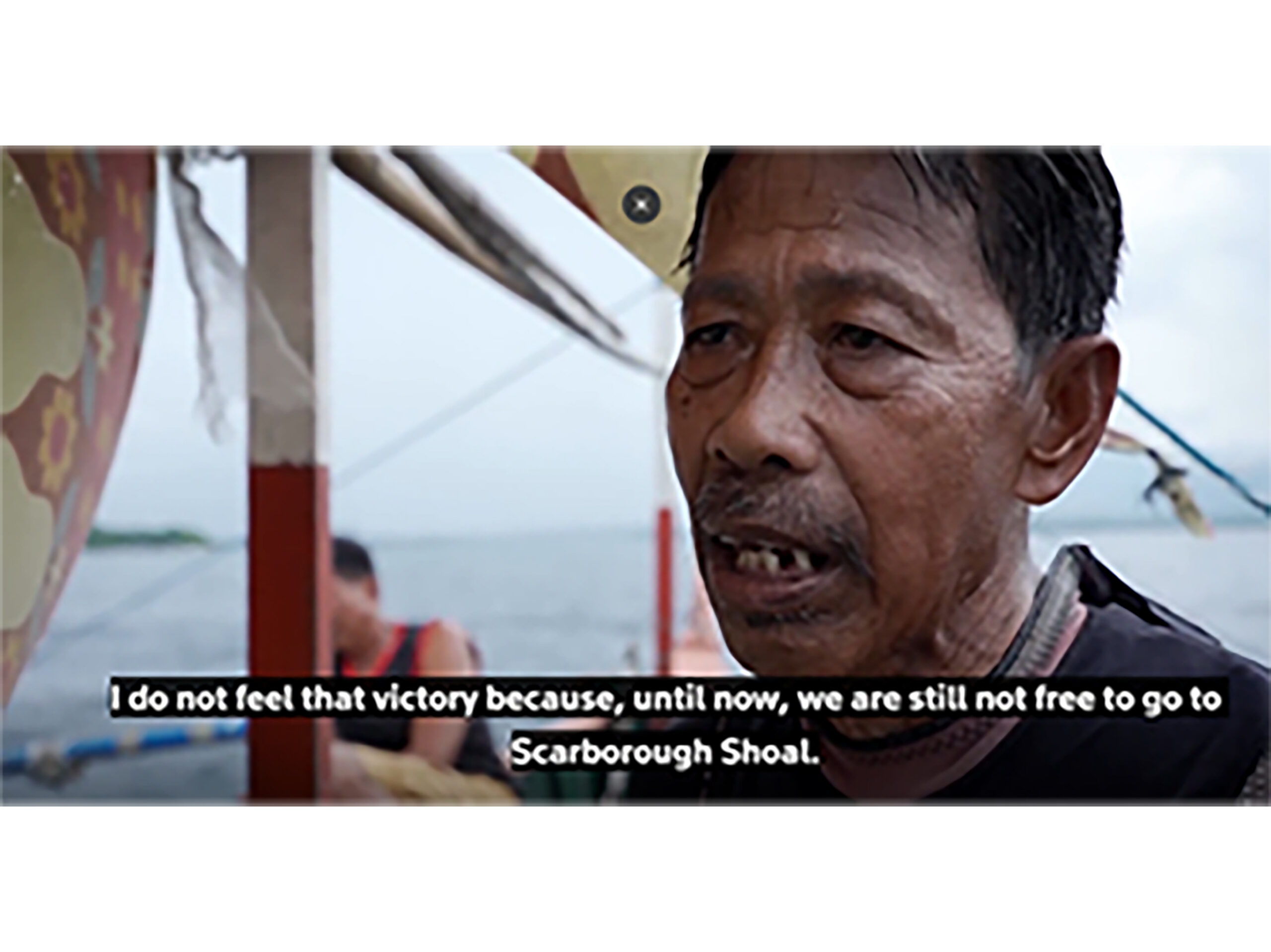
Rony Drio, 59, has not been to the area since 2024. Fellow fisherman Henrilito Empoc, 47, has not been there since 2022. Instead they fish close to the coast.
FISHERMEN SAY DRIVEN AWAY BY WATER CANNON, ANCHORS CUT
"When we heard (in 2016) that we had won, what came to our minds and hearts was the freedom to fish again and the hope of a better livelihood," Empoc recalled.
But Empoc says he has seen Chinese vessels use water cannon against Filipino fishing boats and Chinese personnel have cut their anchor lines to drive them away."They took away our right to fish," said Empoc, who now drives a motorised tricycle taxi to supplement his income.
Drio said a few years ago Chinese personnel ordered him and another fisherman to leave the shoal's lagoon. Because the water was too shallow for their boat, they were forced to carry it across sharp coral.
"The coral hurt our feet, but what hurt more was what they were doing to us," he said.
China's embassy in Manila did not immediately respond to a request for comment about the actions alleged by Filipino fishermen.
Beijing has long insisted that it does not recognise the tribunal's decision and that it has "indisputable sovereignty over Huangyan Island and its adjacent waters.
"TRIBUNAL DECISION HELPED PHILIPPINES GAIN SUPPORT
The shoal has been a recurring source of tensions between Manila and Beijing, with friction flaring up this year over a floating barrier installed by China at the entrance to its lagoon that was later removed after Philippine protests.
Beijing has also proposed establishing a nature reserve at the shoal, a move Manila has denounced as a "clear pretext for occupation."
Scarborough Shoal in the South China Sea
Scarborough Shoal has long been a flashpoint in the dispute between Beijing and Manila over sovereignty and fishing access. China claims almost the entire South China Sea via a "nine-dash line" on its maps, which cuts into parts of the Exclusive Economic Zones of Brunei, Indonesia, Malaysia, the Philippines and Vietnam.
Some diplomats and analysts fear confrontations in the South China Sea could escalate into armed conflict. In June 2024, a Filipino sailor lost a finger during a violent encounter with the Chinese coast guard during a resupply mission to Second Thomas Shoal, where Manila maintains a grounded warship.
Philippine officials say the international tribunal's decision has strengthened Manila's legal position and underpinned a "transparency initiative" of publicising confrontations at sea.It has also helped deepen defence cooperation with allies and led to expanded military and maritime activities with the United States, Japan and Australia.
China's actions have been counterproductive in that regard, says Jay Batongbacal, director at the Institute of Maritime Affairs and Law of the Sea at the University of the Philippines."Without China's actions, the number of allies and security partners for the Philippines definitely would not have increased," he said.
But that is of little comfort to the likes of Drio and Empoc."We won in 2016, but it doesn't feel like a victory to me," Drio said.
Reporting by Adrian Portugal and Karen Lema; Editing by Edwina Gibbs
Type your paragraph here